Best overall
No
image
image
Celestron StarSense Explorer DX 130AZ
Most first buyers
130mm of parabolic aperture on a mount that stays still, plus the one piece of software that genuinely solves the find-it problem.
A first telescope that does not disappoint
Aperture-first picks for a first telescope, with live prices and the magnification math shown. The box says 525x. The optics top out near 140x. We show you which number is which, and where it comes from.
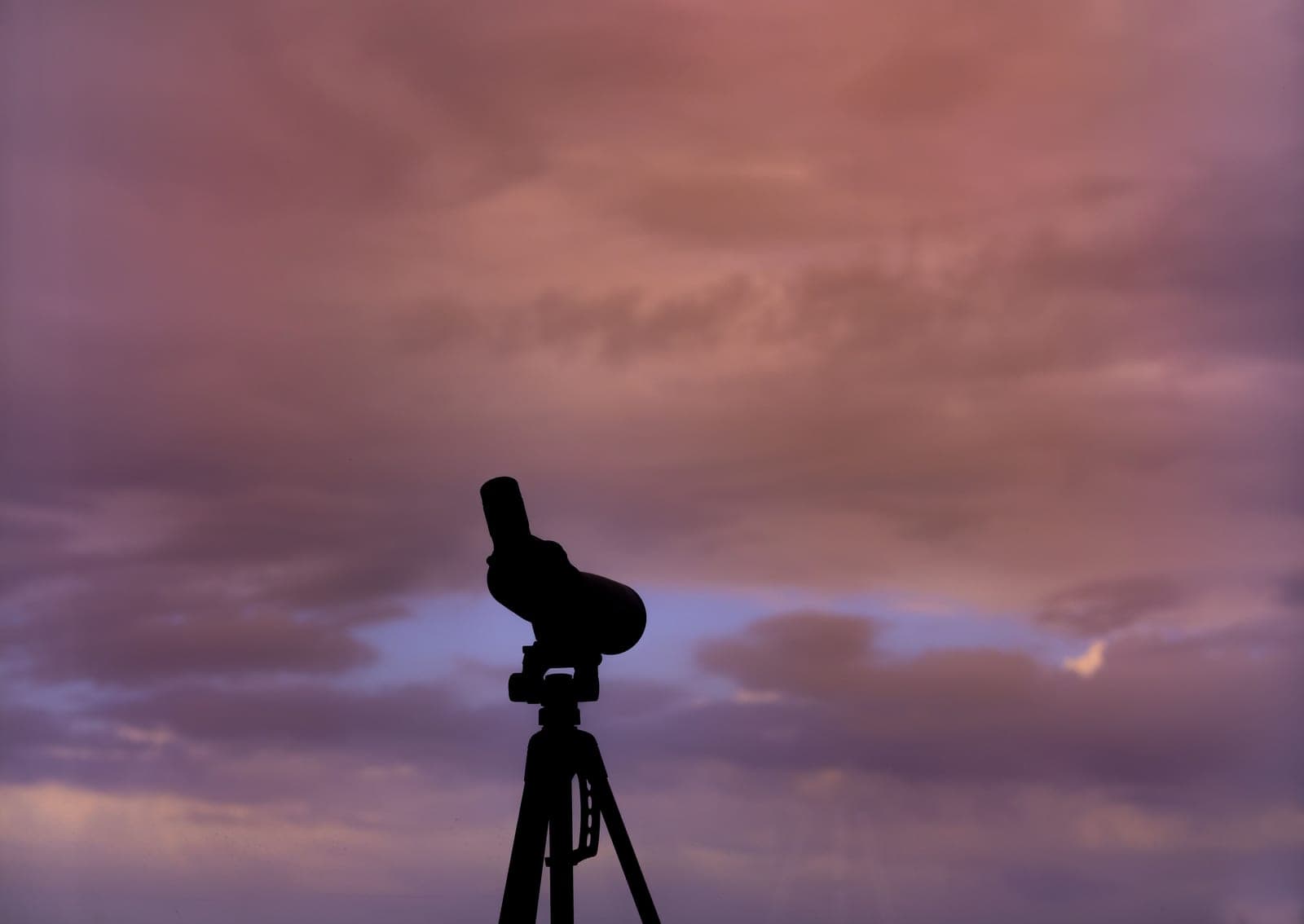
Sunset, which is when most first telescopes actually get carried outside.
The top pick from each of the site’s main rankings, with today’s price. Every one of these was chosen on aperture per dollar first, and every ranking shows the arithmetic behind it.
Best overall
Most first buyers
130mm of parabolic aperture on a mount that stays still, plus the one piece of software that genuinely solves the find-it problem.
Best under $200
Most aperture per dollar
The same 130mm parabolic mirror as scopes costing far more, on a base with no tripod to wobble and nothing to set up.
Best under $500
The one you will not outgrow
Eight inches of aperture on the simplest mount ever designed. This is the telescope experienced observers tell beginners to buy.
Best for planets
The one you will not outgrow
Eight inches of aperture on the simplest mount ever designed. This is the telescope experienced observers tell beginners to buy.
Best gift telescope
Most first buyers
130mm of parabolic aperture on a mount that stays still, plus the one piece of software that genuinely solves the find-it problem.
Best aperture per dollar
The one you will not outgrow
Eight inches of aperture on the simplest mount ever designed. This is the telescope experienced observers tell beginners to buy.
Almost every site in this category says it tested a dozen. We have not looked through a single one, and we would rather say so than pretend. What we did instead: compiled the published manufacturer specifications with every source named, computed what each telescope can actually resolve from its own stated aperture, and checked the price this morning.
If a box claims 525x, we show you the number the optics can really deliver and where that number comes from. Every figure on this site is either published by the maker, with a link to the document it was read from, or computed from one of those figures by a formula we state in full. There is no third category.
Read the methodology — the formulas, the sources for each one, and exactly what we do and do not do.
Seven sections, in the order a first-time buyer actually needs them. Each one is a destination in its own right rather than a list of links.
Best overall
The flagship ranking. Nine beginner telescopes ordered by aperture per dollar, with the magnification arithmetic shown for each one.
Top pick: Celestron StarSense Explorer DX 130AZ
Best value overall
Every price bracket from under $100 to under $1,000, with what each one buys stated in aperture rather than in features.
Top pick: Sky-Watcher Heritage 130 Tabletop Dobsonian

Best for planets
The honest version of what a beginner telescope shows, target by target, computed from resolving limits rather than promised.
Top pick: Sky-Watcher Classic 200P Dobsonian (8-inch)
Best all-rounder
The three optical designs and four mount types, compared on aperture per dollar, maintenance and who each suits.
Top pick: Sky-Watcher Classic 200P Dobsonian (8-inch)

Best gift telescope
How to buy a telescope for somebody else without landing them the one that gets abandoned by February.
Top pick: Celestron StarSense Explorer DX 130AZ

The arithmetic behind every recommendation on this site, with calculators you can run on your own telescope.
One page per telescope: published specifications compiled, optical limits computed, and the box claim checked.
Four pages that between them explain everything this site is built on: what aperture buys, why the magnification claim is meaningless, what a telescope will really show you, and which telescopes to walk past.
Why the magnification number on the box is meaningless, what the real ceiling is, and a calculator for your own telescope.
Top pick: Celestron Eyepiece, Barlow and Filter Kit (1.25")

70mm shows the rings; 150mm shows the Cassini division. Both computed, with what the ring tilt is doing this season.
Top pick: Celestron AstroMaster LT 70AZ

What aperture is, what each size can resolve, and a calculator that runs the numbers on your own telescope.
Top pick: Sky-Watcher Heritage 130 Tabletop Dobsonian

The six traps that produce a disappointing first telescope, each one checkable from the product listing before you buy.
Top pick: Celestron FirstScope 76
Everything on the site is listed on the sitemap, and new pages appear in the feed.
Scope & Sky is a participant in the Amazon Services LLC Associates Program. When you buy through a link here we earn a commission, at no extra cost to you.
That commission cannot move a ranking, and the reason is concrete rather than a promise: the order of every list on this site is set by computed aperture per dollar, and no commission rate changes how much light a mirror collects. We accept no free products and no paid placements.